

Your cart
There are no more items in your cart

The laboratory world is broad and diverse, filled with a wide range of instruments designed for very specific tasks. From simple containers to complex analytical systems, each element has its purpose and place in scientific work.
Given this diversity, having a clear and efficient organization of laboratory equipment is essential. Understanding how laboratory materials are classified helps facilitate daily use, improve safety, and support maintenance and teaching.
In this article, we’ll explore the various ways in which laboratory equipment can be categorized—by material, by function, and by complexity level—providing a clear overview of the diversity and functionality found in modern labs.
This classification is based on the material from which instruments are made, influencing their durability, specific use, and maintenance needs.
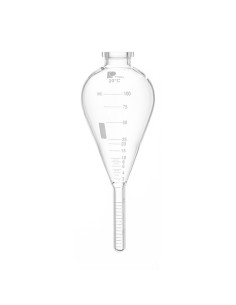
The most common type. Resistant to heat and many chemicals. Examples: test tubes, flasks, beakers.
Lighter and less fragile, though less resistant to solvents and high heat. Examples: pipettes, bottles.
High thermal resistance, ideal for calcination or incineration processes. Examples: crucibles, evaporating dishes.
Mostly used for support, heating, or handling. Examples: tongs, tripods, spatulas.
Includes rubber, cork, or Teflon, often used in stoppers, seals, or insulating components.
One of the most practical ways to organize laboratory tools is by their everyday function:
1. Containment and storage: Vessels for storing substances, like reagent jars or glass bottles.
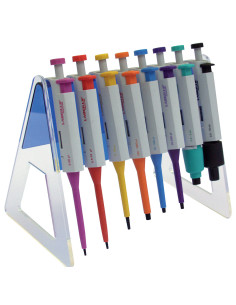
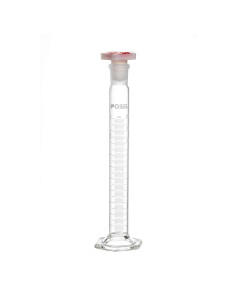
2. Volume measurement: Tools for accurate liquid measurements. Examples: burettes, pipettes, graduated cylinders.
3. Mass and parameter measurement: Includes balances, thermometers, and pH meters.
4. Heating and cooling: Used to control temperature. Examples: Bunsen burners, hot plates, water baths.
5. Support and holding: Structures that support other tools. Examples: universal stands, metal rings, clamps.
6. Separation tools: Used to separate components in a mixture. Examples: funnels, filter paper, centrifuges.
7. Mixing and stirring: Tools for homogenizing substances. Examples: stirring rods, magnetic stirrers.
8. Safety and protection: Crucial for user protection. Examples: goggles, gloves, fume hoods.
This category helps differentiate between basic materials and high-tech lab instruments:
1. Consumables: Used once or a few times. Examples: gloves, capillary tubes, disposable syringes.
2. Common reusable glass/plastic items: Basic and often used. Examples: beakers, funnels, test tubes.
3. Minor instruments: Precision tools of small scale. Examples: tongs, spatulas, thermometers.
4. Major laboratory equipment: Larger, complex devices. Examples: spectrophotometers, centrifuges, autoclaves.
Knowing how laboratory equipment is classified helps improve efficiency, safety, and accuracy in scientific work. It also streamlines teaching, inventory management, and preventive maintenance.
Familiarity with these categories ensures the proper selection of instruments for each task, reducing errors and optimizing lab resources.
For further reading, check out our other posts on glassware types or lab measurement tools.
Glassware such as test tubes and beakers is the most common due to its versatility and resistance.
Because this type of glass is more resistant to thermal shock and chemically more stable.
Materials are usually simpler and passive, while equipment includes more complex devices with specific functions.
Beakers, test tubes, universal stands, burners, and safety gear like gloves and goggles.
 Quick delivery
 High quality
 Safe payment