

Your cart
There are no more items in your cart
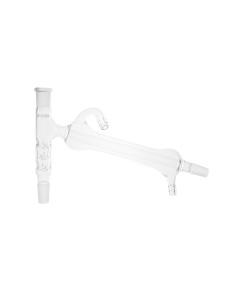
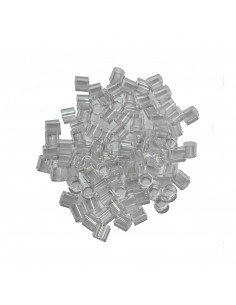
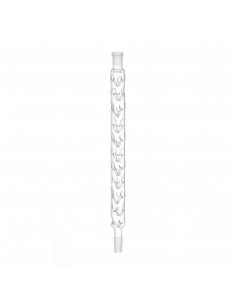
In the world of chemistry, both at laboratory and industrial scale, the ability to separate and purify substances is fundamental to research, development, and production. Among the most important tools to achieve this goal is the distillation column. This equipment is the heart of any fractional distillation process, enabling efficient separation of liquid components with different boiling points—even when those points are very close.
Understanding how a distillation column works, its various configurations, and its applications is essential for obtaining pure products and optimizing processes across multiple industries, from petrochemicals to pharmaceuticals.
A distillation column is an apparatus designed to separate liquid mixtures through fractional distillation. Its main function is to maximize the contact between ascending vapor and descending liquid, thereby facilitating the mass and heat transfer required to separate components.
Unlike simple distillation, which allows for just one vaporization-condensation stage, a distillation column enables this process to repeat multiple times along its height. As the mixture is heated and vaporizes at the bottom of the column, the vapor rises. Upon encountering cooler surfaces within the column (such as trays, packing materials, or indentations), part of it condenses, forming a liquid enriched in the less volatile component. Meanwhile, the descending liquid partially re-vaporizes upon contact with the hotter ascending vapor, enriching the latter in the more volatile component. This continuous cycle creates a temperature and composition gradient along the column: low-boiling-point components concentrate at the top, while high-boiling-point components remain at the bottom.
A distillation column’s ability to precisely separate components makes it a cornerstone in the chemical, pharmaceutical, petrochemical, and food industries. In the lab, they are indispensable for purifying reagents, isolating synthesis products, and performing complex analyses that require high-purity samples. Without these columns, the production of many essential products—from fuels to medicines—would be unfeasible or of much lower quality.
The design of a distillation column varies significantly depending on the operation scale, the nature of the mixture, and the required separation efficiency.
Tray columns are the most common in large-scale industry, such as oil refineries. They consist of a vertical cylinder with a series of horizontally stacked trays or plates at regular intervals. Each tray acts as a vapor-liquid equilibrium stage. Vapor rises through perforations or bubble caps, bubbling through the liquid on the tray, while liquid flows downward from one tray to the next. This design enables high throughput and excellent separation efficiency.
Instead of trays, these columns are filled with inert materials that provide a large surface area for vapor-liquid contact. Packing can be:
Random (e.g., Raschig rings, Pall rings, Intalox saddles): Cost-effective and easy to install, suitable for many types of separations.
Structured (e.g., wire mesh or corrugated sheets): Offer greater separation efficiency and lower pressure drop than random packing, making them ideal for high-performance, energy-efficient applications.
Packed columns are highly versatile and used in processes where low pressure drop is crucial or where corrosive fluids are handled.
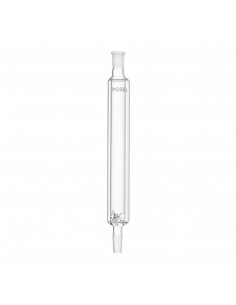
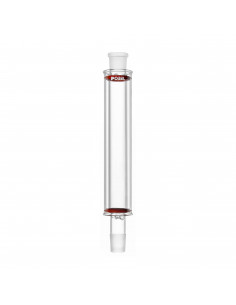
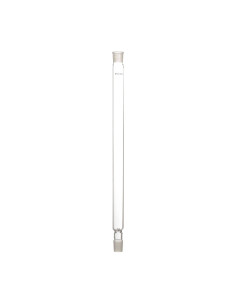
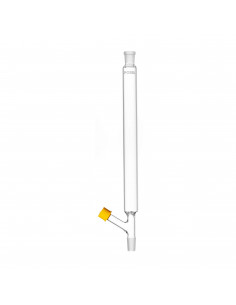
Though simpler than industrial designs, Vigreux columns are a common type of distillation column used in laboratories. Characterized by internal spiral or zigzag indentations, these features increase the contact surface between rising vapor and descending condensed liquid, allowing multiple evaporation-condensation cycles. They are affordable, easy to clean, and offer significantly better separation efficiency than simple distillation—perfect for small-scale purifications in research and teaching.
For extremely difficult separations involving components with very similar boiling points, spinning band columns are used. These columns contain a high-speed rotating band that forms a thin film of liquid along the column wall and provides extensive contact between vapor and liquid. They offer the highest separation efficiency and are used in high-purity research applications such as isotope separation or complex organic compound purification.
Beyond the column itself, a complete distillation setup includes several essential elements:
Distillation Flask / Reboiler: Where the initial mixture is heated to generate vapor entering the base of the column. The reboiler is a heat exchanger that provides the energy for vaporization.
Condenser: Located at the top of the column, the condenser cools the purified vapor back into liquid form. Types include jacketed (Liebig), reflux, or coil condensers depending on the application.
Collector / Receiver: The container that collects the purified distillate or fraction—may be a flask or storage tank.
Temperature and Pressure Control System: Sensors, thermocouples, and pressure gauges are vital to monitor and control conditions within the column, ensuring the process remains within optimal parameters.
Vacuum Pumps / Systems: For distilling heat-sensitive or high-boiling-point compounds, vacuum systems are used to lower the internal pressure, thus reducing boiling points and preventing degradation.
Several critical parameters must be considered to optimize efficiency and output:
Number of Theoretical Plates: The more theoretical plates a column has, the greater its separation power and the higher the purity of the products. This depends on column design (height, type of packing or trays).
Reflux Ratio: The ratio of condensed liquid returned to the column compared to the amount of distillate collected. A higher reflux ratio improves separation but increases energy use and time.
Pressure Drop: The resistance to vapor flow through the column. Excessive pressure drop can limit column capacity or render the process unfeasible, especially under vacuum.
Heat Flow: Precise control of heat input at the reboiler and heat removal at the condenser is essential for maintaining thermal balance and a suitable temperature gradient.
Mixture Properties: The physical properties of the components (boiling points, vapor pressures, azeotropes) directly affect how easy or difficult the separation is and thus influence column design and operation.
Proper maintenance is key to the longevity and efficiency of your equipment.
Regular Cleaning: Clean the column after each use to avoid buildup that could clog trays or packing and contaminate future batches.
Visual Inspection: Periodically inspect for cracks, corrosion, or wear—especially at joints and seals. Any damage can compromise safety and performance.
Proper Storage: Store glass columns in protective racks to avoid breakage. Industrial columns should follow storage guidelines to prevent corrosion or deformation.
The distillation column is a masterpiece of chemical engineering that enables purification of substances at a level unattainable by other means. From basic lab setups to massive industrial towers, the principle remains the same: leveraging boiling point differences to achieve precise separation. Mastering their use and choosing the right column is a foundational step in ensuring quality and efficiency across countless scientific and industrial processes.
At Pobel, we specialize in providing high-quality laboratory materials, instruments, and equipment designed to meet the demands of any process. Whether you need a distillation column for research, production, or quality control—or expert advice to optimize your purification system—our team is here to help. Be sure to check out our full catalog of laboratory columns.
Ensure maximum purity in your processes!
Contact us today for more information and discover how we can equip your lab with the best solutions.
 Quick delivery
 High quality
 Safe payment