

Your cart
There are no more items in your cart
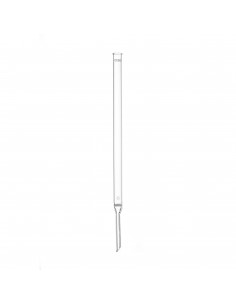
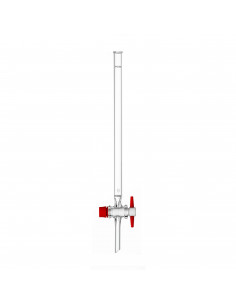
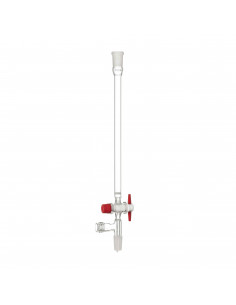
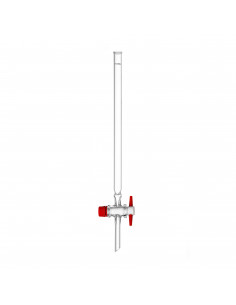
In the world of analytical and preparative chemistry, chromatography is one of the most powerful and versatile techniques for separating the components of a mixture. At the heart of every chromatographic system lies the chromatography column, an element that, although often overlooked, is fundamental to the success of any analysis or purification. These columns are the intelligent “filters” that isolate and quantify target substances—from simple molecules to complex biomolecules. Understanding the diversity, design, and applications of chromatography columns is essential for any scientist seeking accurate and reproducible results in the lab.
Chromatography columns are tubes or capillaries filled with a packing material (the stationary phase) through which a dissolved sample flows in a liquid or gas (the mobile phase). Their purpose is to separate the sample's components based on their different interactions with the stationary and mobile phases.
The principle of chromatography lies in the differential interactions experienced by the components of a mixture as they pass through the column. Some substances interact more strongly with the stationary phase and are retained longer, while others have a higher affinity for the mobile phase and elute (exit the column) faster. This difference in migration speed causes the components to elute at different times, resulting in individual peaks on a chromatogram. This isolation process is what makes chromatography columns so valuable in analytical chemistry.
A chromatography column’s ability to isolate and quantify components makes it indispensable in many fields. In the pharmaceutical industry, they are used for drug quality control and active ingredient purification. In environmental science, they detect contaminants in water and air. In biochemistry, they are crucial for separating proteins and nucleic acids. Their precision and versatility make them essential analytical and preparative tools.
Selecting the right column is a critical step and depends on the nature of the sample, target analytes, and the type of chromatography to be used.
Gas chromatography columns are long, narrow tubes, either capillary or packed, used in ovens that heat the column to separate volatile and thermostable compounds.
Capillary Columns: Very narrow tubes (micron-scale internal diameter) coated with the stationary phase along the inner wall. They offer very high resolution and are ideal for complex mixtures and trace analysis.
Packed Columns: Contain a solid filler impregnated with the stationary phase. They are less efficient but more robust, and used for larger sample volumes or less demanding separations.
Choosing between capillary and packed columns, and selecting the right stationary phase, depends on analyte volatility and polarity. GC columns are essential in petrochemicals, forensic analysis, and aroma detection.
HPLC columns are the most commonly used in analytical labs for a wide range of non-volatile or thermolabile compounds.
Reversed-Phase (RP-HPLC): The most common. The stationary phase is non-polar (e.g., C18, C8), and the mobile phase is polar. They separate compounds based on hydrophobicity. Ideal for most organic compounds.
Normal-Phase (NP-HPLC): The stationary phase is polar (e.g., silica, aminopropyl), and the mobile phase is non-polar. Used to separate polar compounds that don't retain well in reversed-phase columns.
Ion-Exchange (IEC): The stationary phase contains charged groups that interact with ions or charged molecules in the sample. Ideal for proteins, amino acids, nucleotides, and inorganic ions.
Size Exclusion (SEC): Separate molecules based on hydrodynamic size. Larger molecules elute first as they cannot enter the pores of the packing. Used for polymers, proteins, and other macromolecules.
Affinity Chromatography (AC): The stationary phase includes a specific ligand that selectively binds a target molecule. Offers high selectivity and is used to purify specific biomolecules.
These columns may operate at very high pressure, and the choice of packing material (particle size, porosity, surface chemistry) is crucial for efficiency and resolution.
The design and construction materials of chromatography columns are vital for performance and durability.
Column Tube: Usually made of stainless steel (for HPLC, due to high pressure) or borosilicate glass (for low-pressure or GC capillary columns). Glass allows visual monitoring; stainless steel provides robustness and pressure resistance. PEEK (polyether ether ketone) is used for biocompatible applications or to avoid metal interactions.
Stationary Phase (Packing): The active material inside the column—the “heart” of separation. May be porous silica, polymers, alumina oxides, ion-exchange resins, or gel filtration media. Its surface chemistry determines selectivity.
Frits or Filters: Small porous discs, typically stainless steel or porous polymers, located at column ends to retain packing and ensure uniform flow of the mobile phase.
Fittings and Connectors: Attach the column to the chromatography system (pump, injector, detector). Must be leak-free and low dead-volume to maintain peak integrity and separation efficiency. Usually made of stainless steel or PEEK.
Selecting the right chromatography column is both an art and a science, involving multiple considerations:
Nature of the Sample and Analytes: Are they polar or non-polar? Volatile or non-volatile? Ionic or neutral? Temperature-sensitive? The answers guide the chromatographic mode (e.g., reversed-phase, normal-phase, GC), and thus the type of stationary phase.
Separation Objective: Is the goal qualitative (identification), quantitative (concentration), or preparative (purification)? Preparative work requires larger-diameter columns, while analytical work prioritizes resolution.
Required Resolution and Efficiency: For closely related components, you’ll need columns with more theoretical plates or higher-resolution stationary phases.
Cost and Availability: Columns vary widely in price. It’s important to balance performance needs with budget and market availability.
Chemical Compatibility: Ensure the column’s materials (stationary phase and housing) are chemically compatible with your mobile phase and sample to avoid degradation or contamination.
The versatility of chromatography columns makes them indispensable in many disciplines:
Pharmaceutical Industry: Quality control of raw materials and final products, purification of active ingredients, drug stability studies, detection of impurities and metabolites.
Biofuels and Biotechnology: Separation and purification of proteins, peptides, nucleic acids, enzymes, and analysis of biomass and fermentation products.
Environmental Analysis: Detection and quantification of pollutants in water, soil, and air, such as pesticides, PCBs, hydrocarbons, volatile organic compounds, and heavy metals.
Food Industry: Analysis of nutrients, vitamins, additives, colorants, preservatives, and detection of contaminants (toxins, mycotoxins) and adulterants in food and beverages.
Petrochemicals: Analysis of fuel compositions, oils, natural gases, and refined product quality control.
Forensic Science: Identification of drugs, toxins, explosives, and other compounds in biological samples or crime scene materials.
Cosmetics: Quality control of ingredients, impurity detection, and composition analysis of fragrances and personal care products.
Proper maintenance is essential to extend the column’s lifespan and ensure optimal performance.
Guard Columns and Inline Filters: Use guard columns and inline filters to protect the main column from particles, contaminants, and irreversibly binding compounds that can shorten its life.
Cleaning and Reconditioning: Follow the manufacturer’s recommendations for cleaning and reconditioning. This often involves flushing with specific solvents to remove residues.
Proper Storage: Store columns sealed and in the solvent recommended by the manufacturer when not in use. This prevents stationary phase drying or contamination. Keep them in a safe, temperature-controlled location.
Avoid Sudden Pressure and Temperature Changes: Handle columns carefully. Sudden pressure changes can disrupt the packing bed, and extreme temperature variations may affect phase stability.
Chromatography columns are the brain behind one of the most powerful analytical techniques available. From basic research to industrial quality control, their ability to separate complex mixtures into individual components is irreplaceable. Choosing and caring for them properly is crucial to ensuring reliable and efficient results, driving scientific and technological progress across disciplines.
At Pobel, we specialize in offering a wide range of high-quality laboratory materials, instruments, and equipment designed to meet the needs of the most demanding analyses. If your lab requires high-performance chromatography columns, or if you need guidance on choosing the most suitable type for your specific applications, our team of experts is here to help. We provide solutions that guarantee the precision and efficiency your work deserves. Don’t miss the rest of our chromatography column selection.
Don’t compromise the quality of your analysis!
Contact us today to learn more and discover how we can equip your lab with the best chromatographic tools.
 Quick delivery
 High quality
 Safe payment