


Your cart
There are no more items in your cart
Cleaning and disinfecting laboratory equipment are essential processes to ensure the reliability of experimental results and the safety of personnel handling chemical or biological substances. Contaminated equipment can introduce unwanted variables, alter chemical or microbiological reactions, and pose health risks. Furthermore, in regulated environments such as the pharmaceutical or food industries, non-compliance with cleaning standards can result in penalties or compromise the quality of the final product.
This article provides a comprehensive guide on how to properly clean laboratory equipment, addressing the basic importance of the practice, specific methods for different materials, and the most effective tools—such as detergents, brushes, and cleaning devices—for thorough cleaning. It also covers recommendations for drying, storing, and maintaining labware.
Keeping equipment clean is essential to avoid false results, unexpected reactions, or microbial growth that can alter experimental conditions. For example, a single drop of residual acid in a beaker can change the pH of a solution and completely invalidate a chemical analysis.
Cleaning also helps preserve the materials, preventing wear and corrosion caused by abrasive or corrosive residues. In microbiological settings, poor disinfection can lead to the proliferation of pathogens, endangering both lab personnel and biological samples.
Before cleaning begins, it’s essential to prepare the workspace. This includes wearing gloves, protective goggles, and a mask if there’s a risk of aerosol exposure. It's also important to read the Material Safety Data Sheets (MSDS) of any chemicals being handled and to classify materials by contamination level.
Having the right detergents, brushes, soaking containers, and drying areas prepared makes the process more efficient. In educational laboratories, it’s recommended to train students in proper cleaning procedures early on.
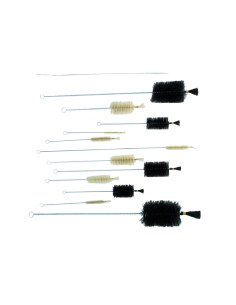
Manual washing remains one of the most common methods. It involves running water followed by a specialized lab detergent. Laboratory brushes are used to access the inside of test tubes, burettes, and flasks. Household detergents should be avoided, as they may leave residues that interfere with future experiments.
Ideal for equipment with dried or crystallized residues. It involves soaking instruments in a cleaning or mild acid solution for a specific time. Afterward, rinse thoroughly with water. Prolonged exposure to aggressive solutions should be avoided for delicate materials.
Uses high-frequency sound waves in a liquid bath to remove microscopic particles. This is especially useful for items with complex shapes or porous surfaces. Requires ultrasonic baths and compatible liquids for the materials.
Some labs use specialized dishwashers that operate similarly to industrial units but use specific lab detergents and cycles. These are effective for cleaning large volumes of equipment, but manual inspection afterward is still recommended.
Glass is durable but fragile. It should be cleaned using appropriate brushes and rinsed several times with distilled water. It can be sterilized in an autoclave or oven if needed. The use of chromic acid should be avoided due to its toxicity.
More susceptible to scratches and heat deformation. Clean with warm water and neutral detergents. Some plastics cannot be autoclaved and must be air-dried and stored away from heat.
Easy to clean and suitable for dry heat sterilization. Resistant to most chemicals. Ideal for processes involving ash, combustion, or high temperatures.
Should be cleaned immediately after use to prevent corrosion. Quick drying and protective oil applications are recommended for infrequently used tools. Avoid prolonged contact with acidic solutions.
The drying process is just as important as cleaning. Moist equipment can harbor microbes or cause corrosion, especially with metal tools.
Air drying in clean spaces, compressed air, or low-temperature ovens are all viable options. Avoid using paper towels that can leave residues.
Incomplete drying encourages bacterial growth and may result in irreproducible outcomes in subsequent experiments.
Store materials on clean shelves, properly labeled, and preferably covered with lids or containers. Some materials require specific humidity or temperature conditions for storage.
No. Household dishwashers do not reach the necessary temperatures and use unsuitable detergents for removing chemical or biological residues.
After every use. Even if it looks clean, invisible residues could affect future experiments.
No. Cleaning removes visible residues and particles; sterilizing eliminates all microorganisms and typically follows cleaning.
Try more specific cleaning solutions, repeat the process, or use an ultrasonic cleaner. In extreme cases, consider replacing the item.


 Quick delivery
 High quality
 Safe payment