

Your cart
There are no more items in your cart
Industrial emission control is now a strategic priority for organizations that want to protect the environment, comply with regulations, and maintain their license to operate. Regulatory and social pressure has grown steadily for good reason: untreated emissions degrade air quality, harm ecosystems, and affect public health. In this context, gas scrubbers have become essential technologies for the abatement of air pollutants. These versatile and scalable systems reduce particulate matter, mists, and reactive gases by establishing controlled contact between a contaminated gas stream and an absorbing liquid. As a result, plants can reduce impacts, avoid penalties, and progress toward decarbonization and responsible production. This article presents the main types of gas scrubbers, explains how they work, their practical advantages and limitations, and reviews their applications across industries. If you need a clear guide to select, operate, or maintain gas scrubbers, you will find technical fundamentals, operational advice, and FAQs designed to answer concrete questions.
Gas scrubbers are air pollution control devices that force intimate contact between a contaminated gas and a liquid to transfer or capture pollutants. Depending on the design, this contact is achieved by atomizing the liquid, bubbling the gas through tray hold-ups, or driving the gas through a packed bed with very high specific surface area. The washing liquid—water, alkaline, acidic, oxidizing solutions, or specific solvents—is selected according to the target pollutant. Functions include: retaining dust and aerosols, neutralizing acidic gases (such as SO₂ or HCl), removing ammonia, or enabling physical absorption of poorly soluble organics. Their relevance is cross‑industry: chemical and petrochemical processes, metallurgy and mining, power generation, waste treatment, food and pharmaceuticals, among others. Their modularity and integration with other devices (filters, cyclones, condensers) make them a cornerstone of any air pollution control strategy.
There are several types of gas scrubbers, each optimized for a given range of pollutants, flow rates, and process conditions. Choosing the right one requires understanding its working principle and real‑world performance under load, as well as operating costs (energy, water, chemicals, purge streams, and maintenance). The following are the most widely used designs.
The Venturi scrubber features a converging–diverging section (the throat) where the gas accelerates to very high velocity.
The packed tower scrubber uses a random or structured packing bed that maximizes gas–liquid contact area with moderate pressure drop.
Tray or perforated‑plate scrubbers include horizontal stages with holes through which gas bubbles across retained liquid layers.
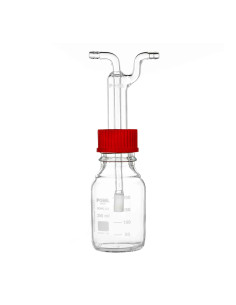
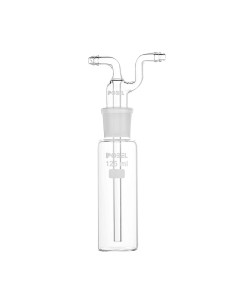
Foam scrubbers use a stable foamy layer—generated by nozzles, porous media, or dedicated geometries—as an ultra‑high‑surface contact medium.
Beyond these, hybrid and specialized designs exist: Venturi sections integrated into packed towers to capture particles and gases simultaneously; rotary scrubbers that create microdroplets by centrifugal force; moving‑bed units for abrasive solids; or foam‑induced tray columns for persistent aerosols.
All gas scrubbers share three capture mechanisms: (1) physical absorption, when the pollutant dissolves into the liquid; (2) chemical absorption, when it reacts with the absorbent (acid–base neutralization, oxidation, reduction); and (3) inertial/diffusive particle capture by impact on droplets or films. Successful design balances hydraulics (pressure drop, flow regimes), mass transfer (interfacial area, contact times), and chemistry (pH, kinetics, stoichiometry). Typical examples include: dust and fly ash retained by inertial impact; SO₂ and HCl neutralized with alkaline solutions; ammonia absorbed in water or weak acids; and organics that may require specific solvents or combined steps with condensation. Proper instrumentation—pH, conductivity, L/G flow, and differential pressure—is indispensable to maintain efficiency over time and anticipate operational deviations.
Gas scrubbers are used in: (a) chemical and petrochemical processes to control acidic and reactive gases; (b) foundries and metallurgy to abate metal fumes and fine dust; (c) power generation as part of flue gas desulfurization; (d) food and pharmaceuticals to maintain controlled environments and prevent odorous or harmful vapors; and (e) mining and water treatment, where gas neutralization and acid‑mist retention are critical. In every case, selection depends on the pollutant matrix, gas flow, available footprint, and the operation/maintenance strategy.
Advantages include: high efficiency for multiple pollutants; the ability to handle particles and gases simultaneously; flexible design and scalability; and compatibility with low‑cost reagents. Disadvantages include water consumption, generation of sludges and purge streams that require treatment, the need for corrosion‑resistant materials, and associated pressure drop—hence fan energy. A total cost of ownership (TCO) evaluation—covering reagents, energy, maintenance, and waste disposal—helps compare alternatives realistically before investing.
For safe and efficient operation: (1) select the scrubber type aligned with the dominant pollutant; (2) define the proper L/G ratio and hydraulic regime; (3) choose materials resistant to corrosion and abrasion; (4) install mist eliminators and drains to minimize carryover; (5) implement preventive maintenance of nozzles, pumps, and packing; (6) monitor pH, conductivity, and suspended solids to reduce fouling; and (7) train staff in chemical handling and start-up/shutdown procedures. These good practices, supported by documenting lessons learned, analyzing historical trends, and validating changes through controlled tests, extend equipment life, sustain efficiency, and ensure long-term compliance.
Gas scrubbers can remove coarse and fine dust, mists and aerosols, acidic gases (SO₂, HCl, HF), basic gases such as ammonia, and certain organic compounds. The key is to match design and mechanism: Venturi for fine particulates, packed towers for soluble gases, trays for controlled reactions, and foam scrubbers for final polishing.
Venturi units maximize particulate and mist capture thanks to extreme atomization and high velocity gradients, but they consume more energy due to pressure drop. Packed towers prioritize mass transfer with low pressure loss and are optimal for absorbing soluble or reactive gases; maintenance focuses on preventing packing fouling.
They require preventive routines: cleaning or replacing nozzles, checking pumps and seals, periodic chemical washing of packing if fouling occurs, inspecting the mist eliminator, controlling recirculation pH and solids, and calibrating instruments. A sound plan reduces unplanned downtime and operating cost.
Yes, provided that water and reagent consumption are optimized, recirculation is used where feasible, and purge streams and sludges are properly treated. Integrating heat recovery, automation, and continuous‑improvement programs further reduces environmental impact and total cost.
 Quick delivery
 High quality
 Safe payment