

Your cart
There are no more items in your cart
Glass is a fundamental material in science, industry, and everyday life. From windows and containers to scientific instruments, its versatility makes it indispensable. Among the wide variety of glasses available, borosilicate glass stands out due to its superior properties compared to common glass. This material combines resistance, durability, and safety, making it essential in multiple applications. In this article, we will explain what borosilicate glass is, its characteristics, the types that exist, and its main uses.
Borosilicate glass is a type of glass composed mainly of silica (SiO₂) and boron trioxide (B₂O₃), along with small amounts of other oxides that improve its properties. Unlike common soda-lime glass, which is made of silica, sodium carbonate, and limestone, borosilicate is distinguished by its excellent heat and chemical resistance. It was developed in the late 19th century, when German scientists sought a material capable of withstanding extreme temperatures without fracturing. Since then, its use has expanded to many fields.
- High thermal resistance: withstands sudden temperature changes without breaking.
- Low thermal expansion: reduces the risk of fractures due to thermal shocks.
- Great chemical resistance: does not easily degrade when in contact with acids, bases, or other chemicals.
- Transparency and purity: allows excellent light transmission and does not alter the compounds it contains.
- Durability against impacts: stronger than conventional glass, though it can still be fragile under very strong blows.
There are different types of borosilicate glass, classified according to their application:
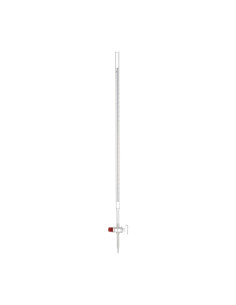
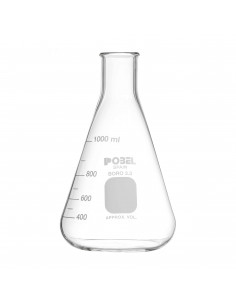
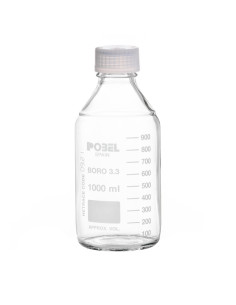
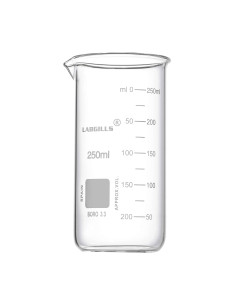
- Borosilicate glass for laboratories: used in flasks, test tubes, cylinders, and beakers due to its resistance to chemicals and high temperatures.
- Borosilicate glass for domestic use: used in kitchenware and containers resistant to ovens, microwaves, and dishwashers.
- Borosilicate glass for industrial and technological use: applied in chemical reactors, lighting systems, and optical components.
- Commercial variants: well-known brands such as Pyrex or Duran have developed specific versions that ensure greater resistance and precision.
Borosilicate glass is widely used in various sectors due to its unique properties:
- In laboratories: essential for the production of reaction containers, flasks, test tubes, and condensers.
- In the chemical and pharmaceutical industry: enables the production of safe reaction and storage equipment.
- At home: found in heat-resistant kitchenware, airtight containers, and cooking utensils.
- In technology: used in lighting, solar panels, optical devices, and electronic equipment.
- In construction and architecture: applied in high-resistance windows and structures exposed to extreme temperature variations.
Borosilicate glass offers multiple advantages:
- Heat resistance, making it safe under high temperatures.
- Durability and long service life.
- Safety and chemical resistance.
- Versatility in industrial, domestic, and technological applications.
However, it also presents limitations:
- Its cost is higher than that of common glass.
- Although stronger than other glasses, it can break under very strong impacts.
The main difference lies in its chemical composition and properties. Common glass is cheaper and less resistant, while borosilicate withstands high temperatures and is more durable against chemicals.
Yes, borosilicate glass is completely safe for cooking since it withstands high temperatures without releasing toxic substances or altering food.
It is widely used in laboratories because it can withstand aggressive chemical reactions and high temperatures, ensuring precision and safety in experiments.
Borosilicate glass is designed to resist heat, but if subjected to an extremely sudden temperature change or a strong impact, it can fracture.
 Quick delivery
 High quality
 Safe payment